In the Poconos, rhododendrons feel ubiquitous. They grow along shaded trails, cluster beneath hardwood canopies, and bloom each June and July in soft bursts of pink and white that seem perfectly suited to the region’s cool air and rocky soil. Evergreen through the winter, their broad leaves provide welcome color against snow-covered hillsides, offering one of the few signs of life in the quietest season. Few plants are as closely tied to the identity of the area. Long before landscaping trends embraced native species, rhododendrons were already defining the character of the mountain landscape itself.
It is perhaps no surprise, then, that one of the most important rhododendron nurseries in the world once operated here.
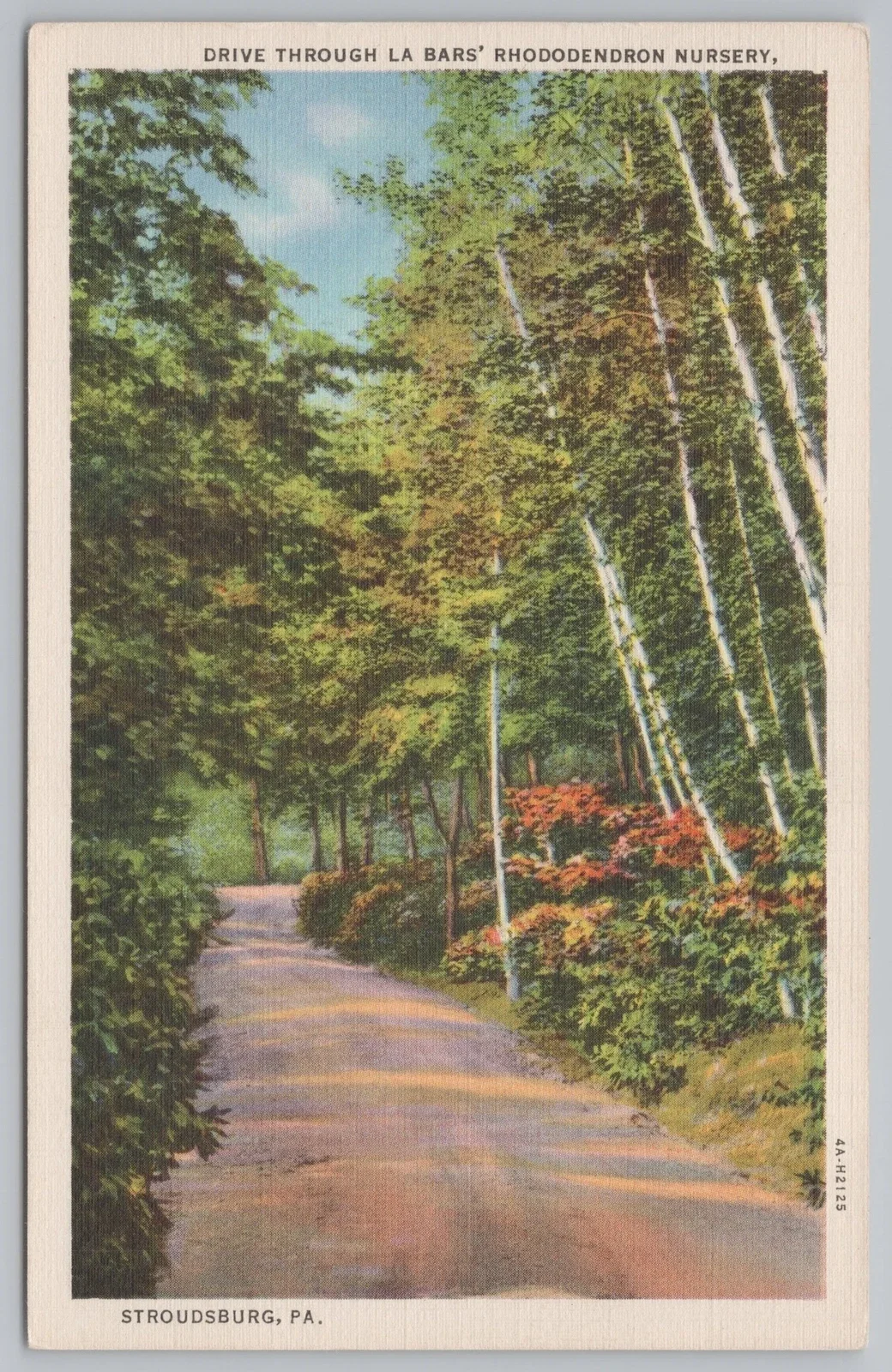
LaBars’ Rhododendron Nursery Postcard
A Nursery Rooted in the Mountains
LaBars’ Rhododendron Nursery was founded in 1917 by William K. La Bar on land just outside Stroudsburg, Pennsylvania – property the LaBar family had owned since the eighteenth century, when ancestor Peter LaBar settled in the region and built one of the earliest homes in what would become the borough.
Set across 133 acres off West Bryant Street, the nursery specialized in rhododendrons, azaleas, mountain laurel, and other native shrubs uniquely suited to the Appalachian landscape. At a time when many American gardens still relied heavily on imported European ornamentals, La Bars’ focused on plants already adapted to the soils, climate, and rhythms of eastern forests.
The choice was both practical and visionary. The Pocono Mountains provided nearly ideal growing conditions: acidic soil, ample rainfall, cool summers, and sheltered woodland environments. What grew naturally in the wild could be cultivated successfully at scale.
Over the following decades, the nursery expanded dramatically, supplying gardeners, landscapers, estates, and institutions throughout the eastern United States. By the 1950s, LaBars’ Rhododendron Nursery had become the second-largest producer of rhododendrons in the world, a remarkable achievement for a business rooted in a small mountain town.
Growing a Regional Landscape
Evidence from surviving nursery catalogs reveals an operation far larger and more sophisticated than one might expect. By the early twentieth century, LaBars’ had established branch nurseries across the Appalachian Mountains, including growing grounds in the Blue Ridge Mountains of North Carolina at elevations near 4,000 feet, as well as plantings near White Sulphur Springs, West Virginia.
These locations allowed shrubs to be cultivated within the climates where they naturally thrived before being shipped to customers across the country. Demonstration plantings near prominent destinations – including landscapes visible to visitors at resort hotels – introduced travelers to the beauty and resilience of native American shrubs.
In this way, the nursery helped shape not only private gardens but the visual identity of resort landscapes during the golden age of American leisure travel. As visitors encountered rhododendrons and mountain laurel incorporated into designed grounds, a distinctly American approach to landscaping began to emerge – one rooted in regional ecology rather than imported tradition.
Landscape architects and estate planners increasingly specified native shrubs supplied by nurseries like La Bars’, helping integrate wild Appalachian character into formal design.
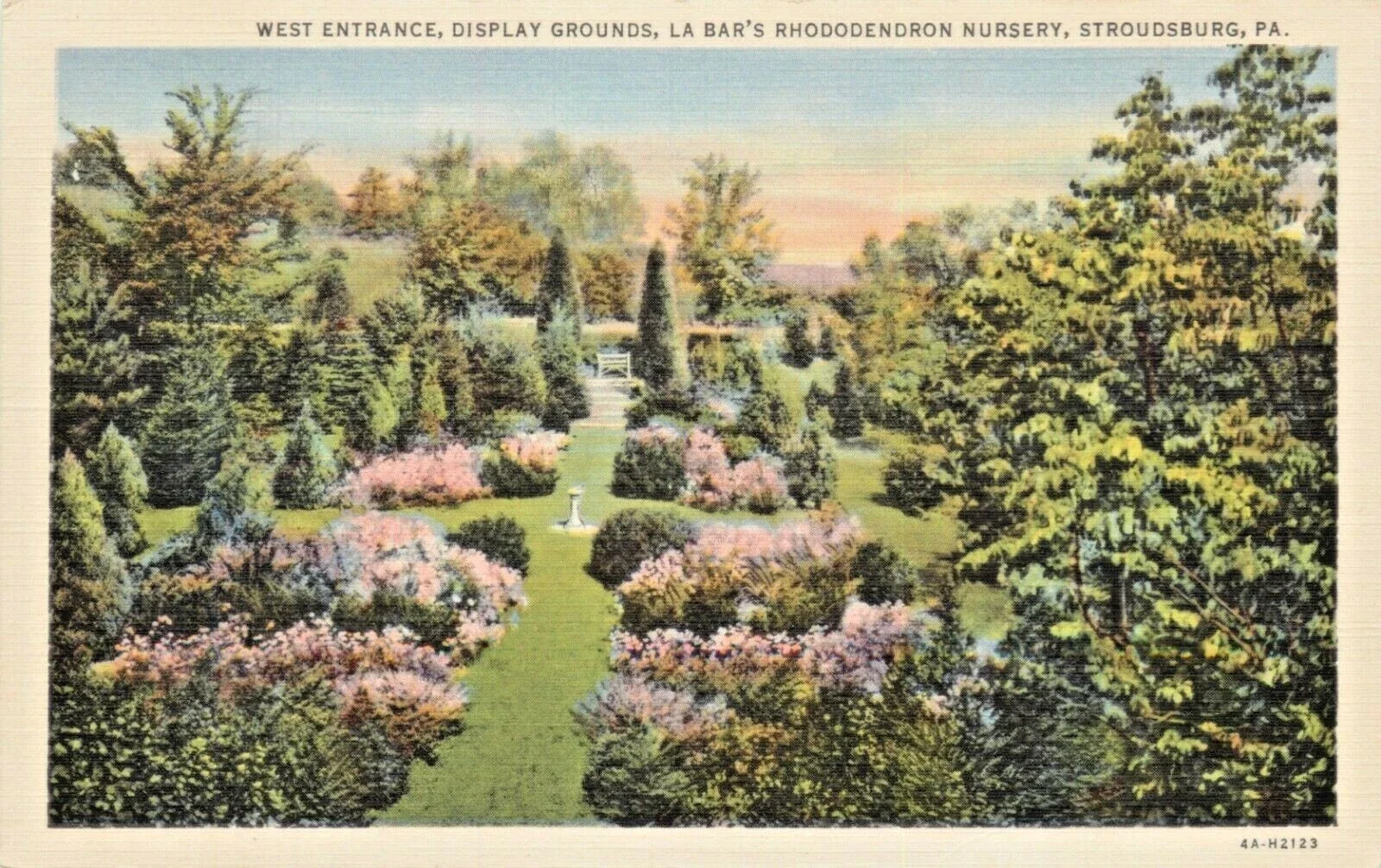
Vintage La Bars’ Rhododendron Nursery postcard showing the display grounds
Advocates for Native Plants
What stands out most in the nursery’s own literature is its philosophy. Rather than presenting plants simply as commodities, La Bars’ emphasized successful cultivation and long-term adaptation. Their writings suggest an early belief that American landscapes should grow from native environments – an idea that feels strikingly modern today.
The nursery promoted shrubs not only for their beauty but for their durability: evergreen foliage that held color through winter, seasonal blooms that reflected local cycles, and plants capable of thriving without constant intervention. Rhododendrons, mountain laurel, and related species offered year-round structure in northern gardens, providing greenery even when snow covered the ground.
Decades before the contemporary native-plant movement gained momentum, nurseries like La Bars’ were already advocating for landscapes shaped by place.
A Catalog as a Window into the Past
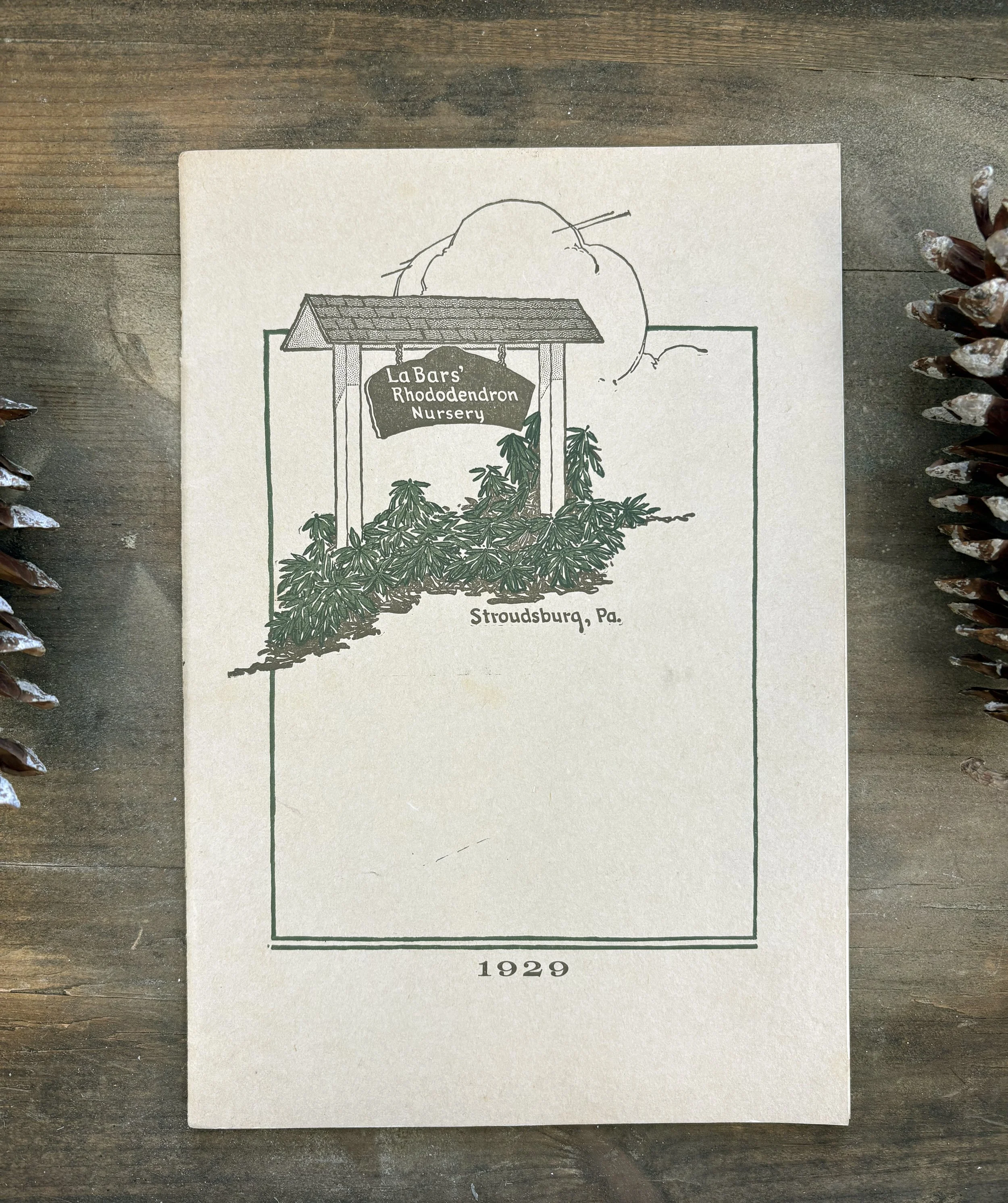
La Bar's’ Rhododendron Nursery Catalog from 1929
The inspiration for this look back came from a small piece of paper ephemera — a 1929 La Bars’ Rhododendron Nursery price list that recently came into our posession. While modest in appearance, the catalog offers a fascinating glimpse into how the nursery presented itself during its early growth.
Its pages reveal carefully photographed specimen plants prepared for shipment by rail, descriptions emphasizing hardiness and regional suitability, and an extraordinary range of native shrubs offered to customers across the country. The catalog reads less like a sales brochure and more like a guide to an emerging philosophy of American gardening – one grounded in ecology, elevation, and climate.
Through documents like this, it becomes easier to imagine the scale of activity once centered in Stroudsburg: workers preparing carloads of plants, orders traveling outward by train, and Pocono-grown rhododendrons reshaping landscapes far beyond Pennsylvania.
A Place Remembered
The nursery remained on its original property until 1982, when the land was sold and eventually developed into what is now LaBar Village. Today, little visible evidence remains of the fields and planting rows that once stretched across the hillside.
Yet the legacy of La Bars’ Rhododendron Nursery persists quietly throughout the region. Each summer bloom along a wooded trail, each evergreen cluster bright against winter snow, echoes a landscape tradition that the nursery helped cultivate and share.
The rhododendron feels native to the Poconos because it is – but also because generations of growers, gardeners, and designers chose to recognize its belonging here.
Though the nursery itself has vanished, its influence survives wherever native shrubs were planted to make cultivated landscapes feel inseparable from the mountains that inspired them.
Series Note
At Pocono Mountain Provisions, we come across so many great pieces of local ephemera. This article is part of an ongoing series exploring Pocono Mountain history through surviving paper ephemera — catalogs, advertisements, maps, and printed materials that offer small but meaningful windows into everyday life in the region’s past.